
The Architecture of Silence: Why Collectors Crave Russian Realist Art

In an era defined by hollow noise and the racing speed of everything digital, we find ourselves searching not just for art, but for some kind of sanctuary. We crave a pause. A moment where the static clears, and we are held by something deep, timeless, and true.
This desire for pravda—the Russian word for "truth"—is the beating heart of the Russian Realist tradition. It is why, when the rest of the world turned toward abstraction and irony, these masters quietly preserved the sacred lineage of the Old Masters. They did not paint to shock; they painted to reveal.
These artists developed specific methods for this. They viewed the canvas as a world to be built, not just a picture to be copied. By looking at their approach to space, light, color, symbolism, and mentorship, we can learn how they achieved such a depth.
For the collector seeking an antidote to modern chaos, understanding the philosophy behind these masterworks reveals why they resonate so deeply with the soul.

Key Takeaways
- The "Pravda" Mission: Russian Realists rejected Western style to capture the raw, emotional truth (pravda) of Russia.
- Architectural Space: Artists like Repin used perspective to make viewers feel like participants, not just observers.
- Emotional Atmosphere: Light and air were painted to convey mood, often reflecting a distinctly Russian melancholy.
- Psychological Color: Color wasn't just for show; it was a language to reveal the internal character of a scene.
- Symbolic Detail: Every element, from posture to background objects, was a symbol used to reveal the subject's soul.
The Sanctuary of Space
Have you ever stood before a painting and felt the room around you dissolve? This is not accidental; it is by design.
The masters of the Surikov Institute did not view the canvas as a flat surface, but rather as part of the narrative of the world they were building. They employed a "deep-laid" perspective—a technique championed by Ilya Repin—to guide the viewer’s spirit, not just their eye. By manipulating the horizon line, they force us to step inside the frame, transforming us from passive observers into participants.
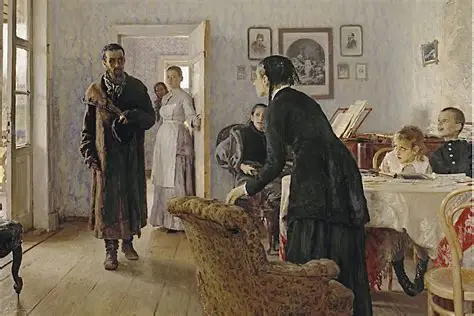 Ilya Repin’s use of perspective pulls the viewer into the room.
Ilya Repin’s masterpiece, They Did Not Expect Him, shows this perfectly. Repin didn't just drop figures onto a canvas. He built an environment.
How Repin Built the World:
The Horizon Line
Repin placed the horizon line above the middle of the canvas. This forces us to look slightly down on the scene, making us feel like we are actually in the room.
The Center
The middle of the story isn't in the center. Repin moved the focus to the left, in the space between the man and his mother, focusing attention on their emotional shock.
Deep-laid Lines
He used the lines of the floorboards and ceiling to pull the viewer's eye from the front of the painting deep into the back of the room, inviting participation.
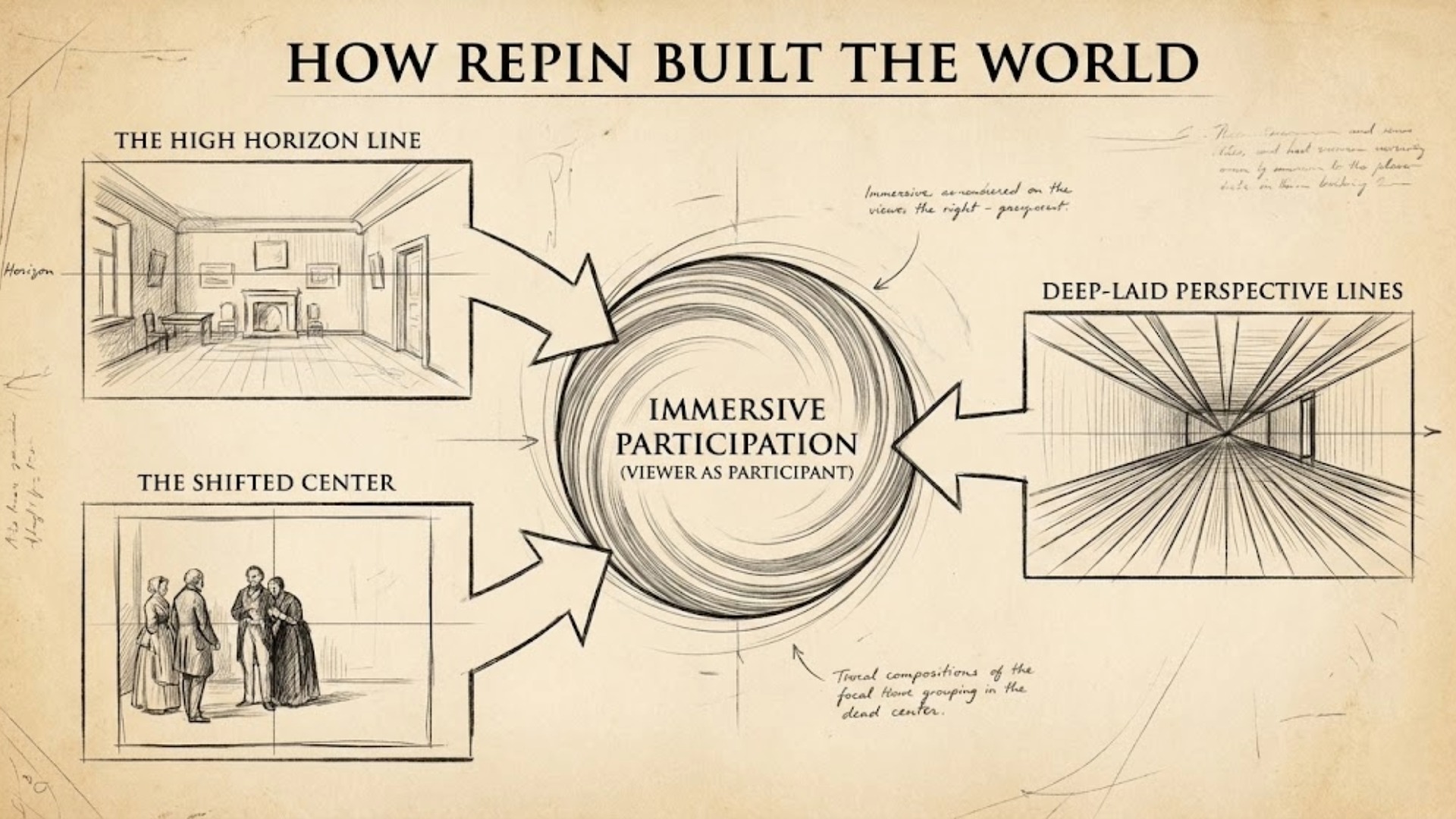 The convergence of these elements creates the "immersive" effect. (Click to expand)
Because of this, the viewer isn't just watching, but rather they are participating in the drama.
We see this legacy alive today in the works of Alexey Sukhovetsky and Stanislav Brusilov. They do not just depict a landscape or an interior; they construct a space for you to inhabit. In their work, the geometry of a room or the sweep of a valley becomes a vessel for silence, allowing you to breathe in the stillness that the modern world denies you.
Painting the Air
For the Russian Realist, "atmosphere" is not just a backdrop, but the subject itself.
There is a distinct melancholy in the Russian landscape—a "sad calmness," as Isaac Levitan described it—that requires a masterful hand to capture. It is the ability to "paint the air," giving weight to the light as it moves through a room or settles on a snow-covered field.
 A symphony of cool blues and warm greys capturing the dignity of winter.
Consider the snowscapes of Nikolai Sergeyev. He rejects the jarring, synthetic colors of contemporary trends in favor of purity. His whites are never just white; they are a symphony of cool blues and warm greys, capturing the quiet dignity of winter. Similarly, Nikolai Fedorovich Novikov treats light as a physical presence. In his interiors, light does not just illuminate objects; it embraces them, creating an emotional atmosphere that feels almost holy.
This is art that does not shout. It whispers, inviting you to slow down and listen.
This drive for truth led them to plein air painting (painting outdoors). Valentin Serov painted Girl in the Sunlight over three months. He wanted to capture the "play of light and shade" while keeping the colors fresh.
For Levitan, capturing light was about capturing a feeling. The cool light of winter or the haze of summer was linked to the spiritual mood of the scene.
The Intellectual Depth of Color
"An artist must take greens very seriously."
This maxim, held by the master Gennady Pasko, distinguishes the amateur from the visionary. To the uninitiated, a forest is simply green. To the master—trained in a lineage that stretches back centuries—color is a psychological language.
| Amateur View | Master View |
|---|---|
| Sees a forest as a single "green." | Sees infinite variations of green. |
| Uses color to fill in lines. | Uses color to build form and mood. |
| Ignores subtle tone shifts. | Believes every tone has emotional meaning. |
The Russian palette is designed to reveal the internal character of a scene. Artists like Nikita Fedosov and Mikhail G. Abakumov use color to build form and mood, understanding that the specific green of a spring morning carries a different emotional frequency than the green of a late summer dusk. This is not decoration; it is truth in form. It honors the complexity of nature and the depth of the human experience.
Conveying Inner Worlds Through Symbolism
Painters like Ivan Kramskoi wanted to show the invisible spiritual life of their subjects. They did this by using the painting as a "signifier system." Every object and color was a symbol designed to communicate the soul.
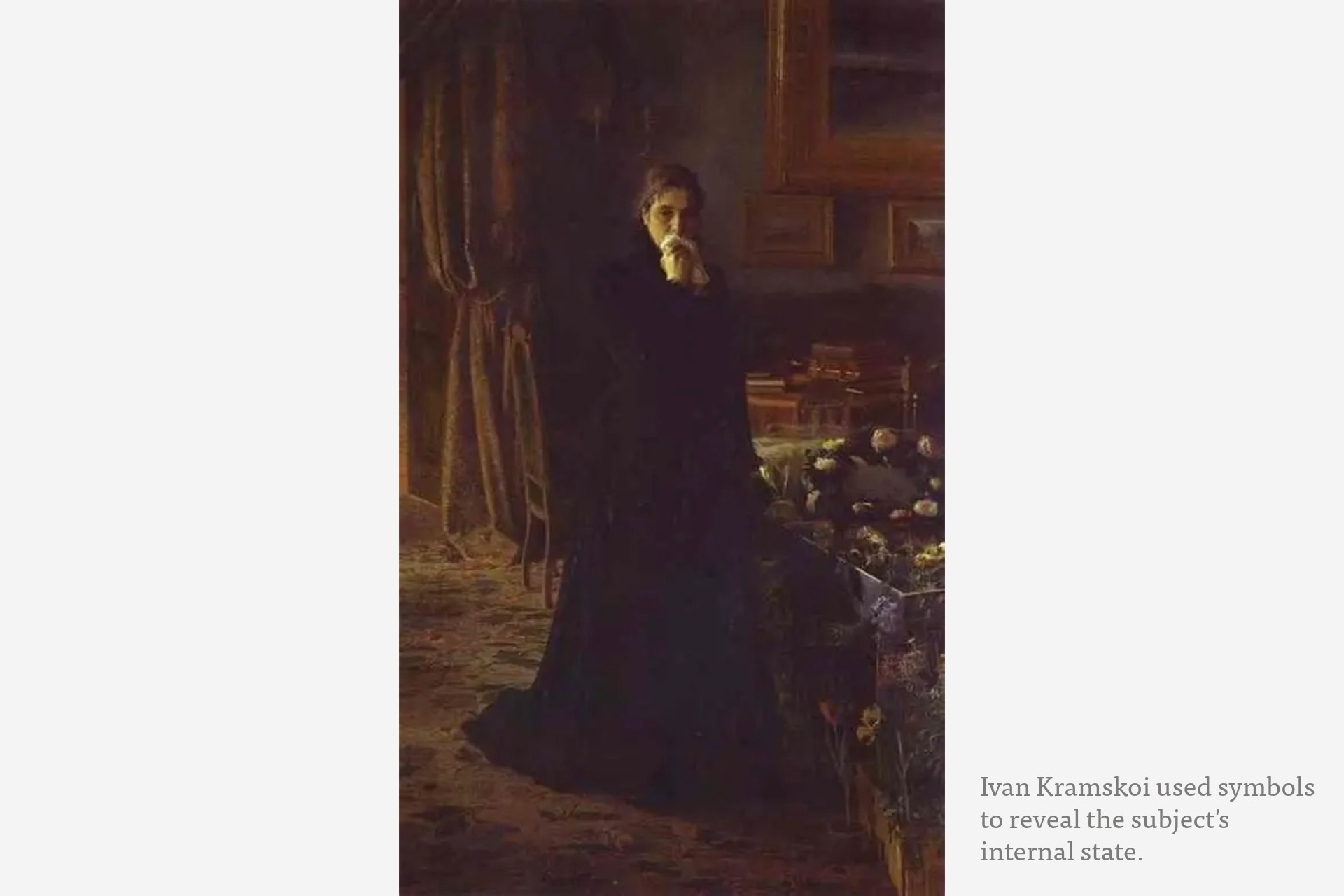
In his painting Desolate Grief (also known as Inconsolable Grief), Kramskoi used three main tools to show a mother's pain:
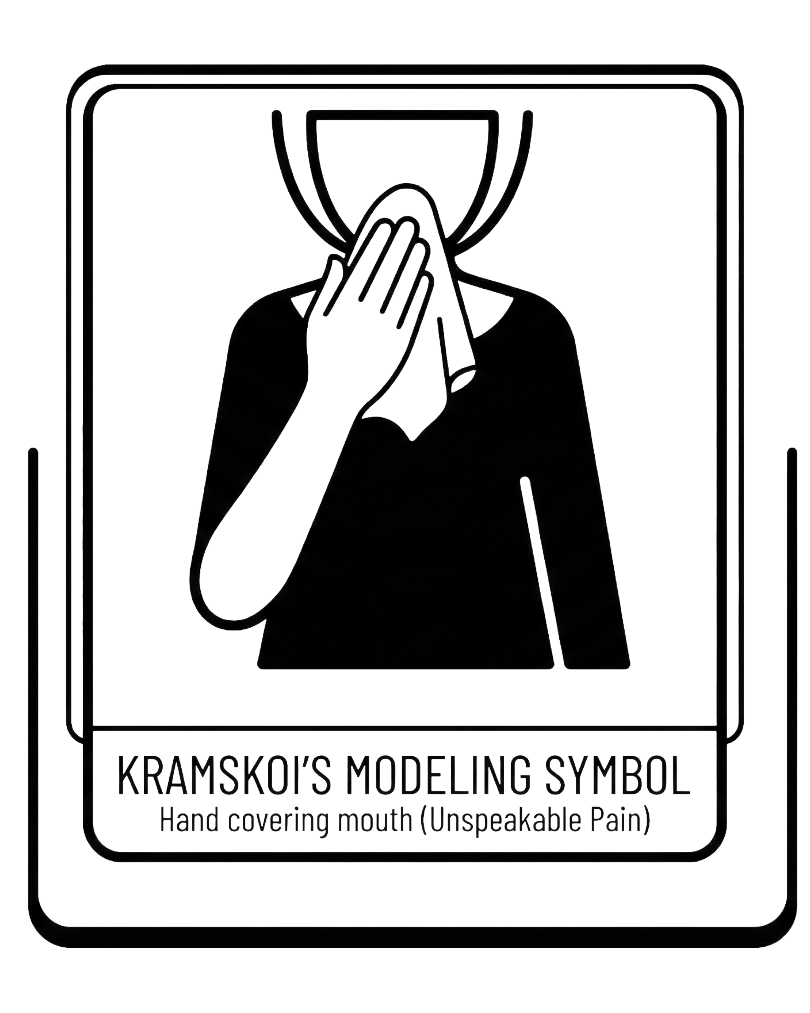
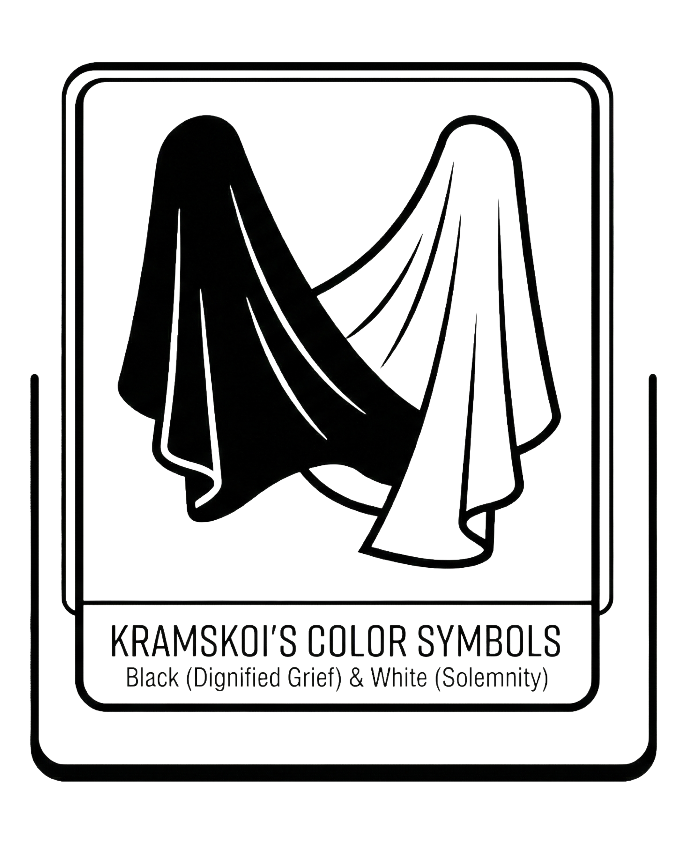

By using these symbols, the portrait becomes more than a picture. It becomes a window into the subject's grief.
The Unbroken Lineage
Perhaps the most compelling aspect of this collection is the story of its preservation. While Western art schools dismantled their traditional curriculums, the Russian academies maintained an "unbroken lineage" of mentorship.
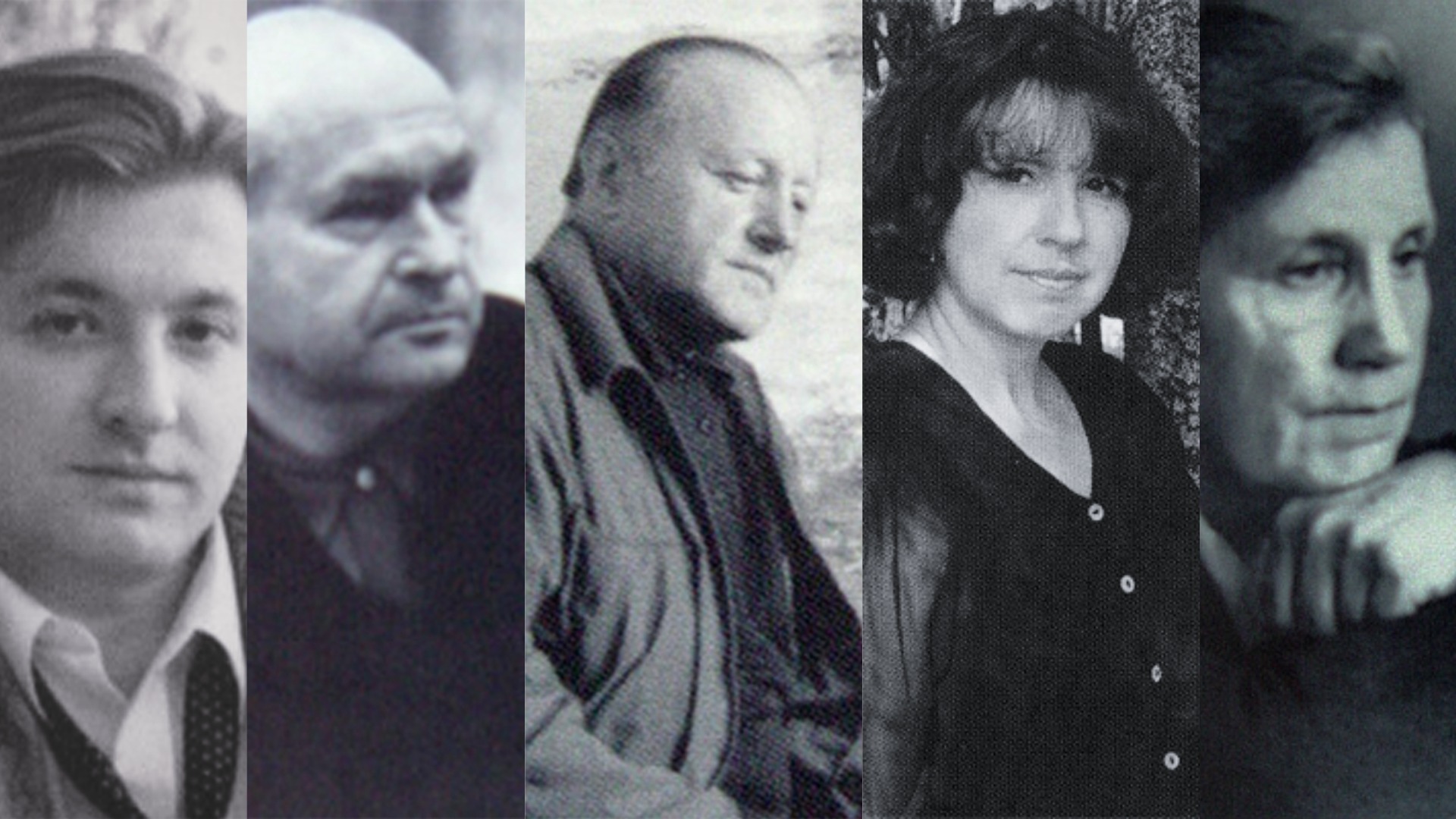 The sacred trust of mentorship passed down through generations.
Our John Wurdeman V described showing his work to the legendary Yuri Kugach as "magical." Even while studying with Kugach's grandson, he received tips from the grandfather. This hands-on teaching was the only way to pass down the "culture of seeing". It ensured that the philosophy of Russian Realism survived across generations.
The Kugach dynasty is the embodiment of this sacred trust. From the legendary Yuri Kugach to his son Mikhail and grandson Ivan, the flame of expertise has been protected and refined.
When you acquire a work from this lineage, you are not simply buying a painting. You are becoming a custodian of a tradition that values craftsmanship over celebrity, and legacy over trend. You are securing a piece of history that offers what we need most today: a return to beauty, silence, and truth.
Frequently Asked Questions (FAQ)
Who were the "Wanderers" (Peredvizhniki)?
They were a group of Russian realist artists who formed an artists' cooperative in protest of academic restrictions. They evolved into the Society for Traveling Art Exhibitions.
Why is "Pravda" important in this art style?
Pravda means "truth." These artists prioritized showing the harsh or emotional reality of life over creating idealized or "pretty" pictures.
Do these techniques apply to modern digital art?
Yes. Concepts like placing the horizon line to control the viewer's psychology or using color variations to build form are fundamental to all visual arts, including photography and game design.
Where can I see these paintings?
Many of these masterpieces, including those by Repin, Serov, and Kramskoi, are housed in the State Tretyakov Gallery in Moscow.
Explore the sanctuary of the Russian Realists in our current collection.
View Collection