
From Divine Light to Black Squares: The Spiritual Continuum of Russian Art
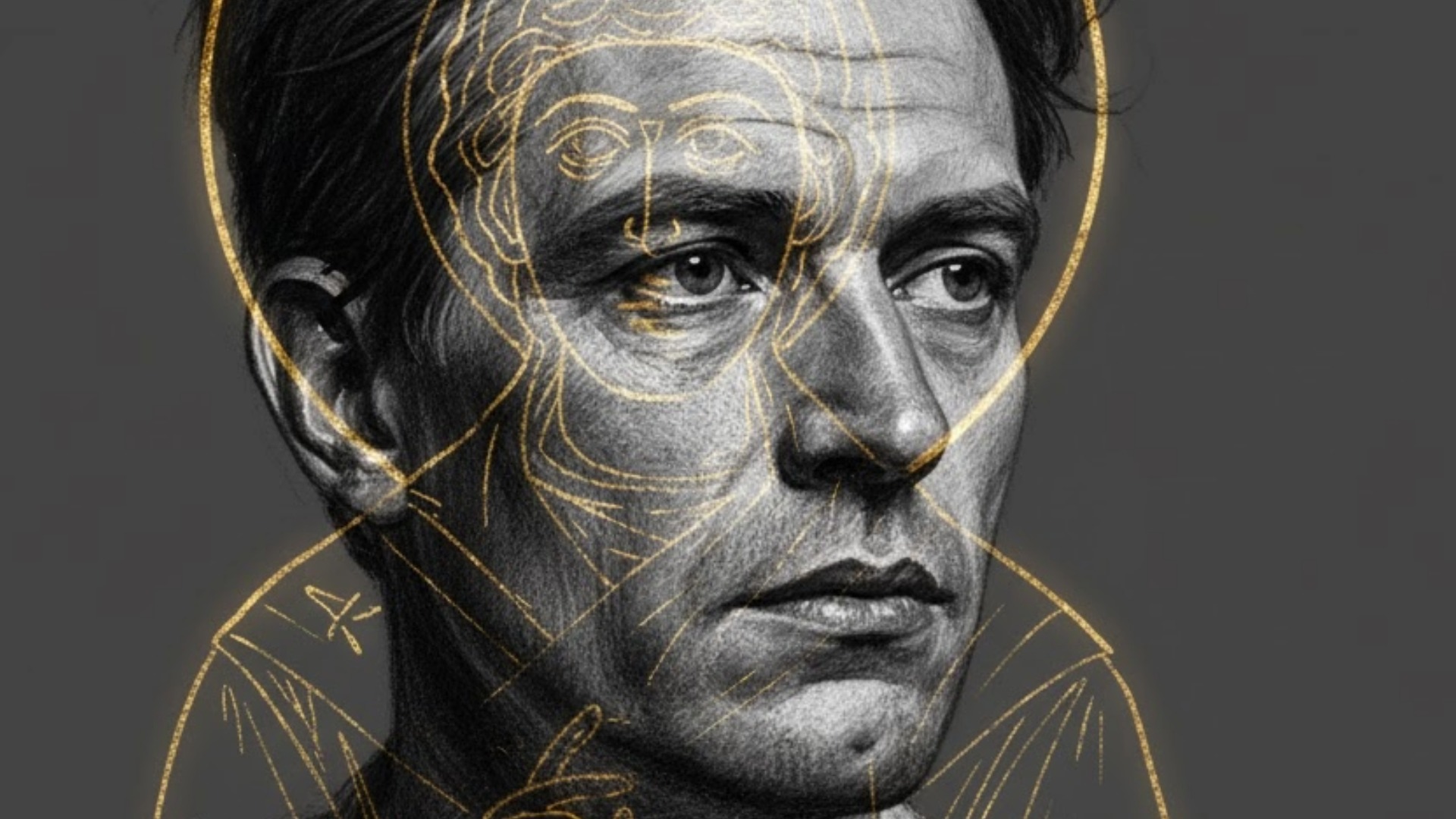
Russian art presents a fascinating study in contrasts. On one hand, we encounter the serene, timeless visages of ancient icons, whose inverted perspectives and golden light seem to many believers as a direct portal into a divine reality. On the other, we observe the stark, uncompromising geometry of the early 20th-century avant-garde.
How can such radically divergent, seemingly irreconcilable visions coexist within a single artistic tradition? Beneath these disparate movements runs a persistent spiritual lineage—an enduring, centuries-long search for a higher, unseen reality. That search is like a golden thread that unifies the sacred art of the past even with the radical art of the revolution and the quiet realist masterworks that survived the Soviet age.
Avant-Garde's Inheritance
Artists like Malevich and Kandinsky appropriated the icon's spiritual role to create a "new god" for a secular era.
Post-Revolutionary Survival
The spiritual impulse endured the Soviet era by translating "Divine reality" into "poetic truth" within realist painting.
Icons as Materialized Faith
Russian icons are "visualized theology," rejecting terrestrial perspective to articulate a spiritual dimension.
The Divine Blueprint:
To appreciate the aesthetic foundation of Russian art, one must begin with the Russo-Byzantine icon and its spiritual resonance. The icon and its intentionally, almost surreal, style draws the viewer into a timeless, spiritual space, rather than directing the eye toward a single, earthly focal point.
This unique spiritual vocabulary—the method of depicting what the soul perceives rather than what the eye sees—became the enduring bedrock of the Russian artistic consciousness for centuries.
The Avant-Garde's Sacred Subversion
When early 20th-century Russian artists sought to liberate themselves from academic realism, they did not exclusively rely on Western innovators. They possessed their own deeply ingrained, native tradition: the icon.
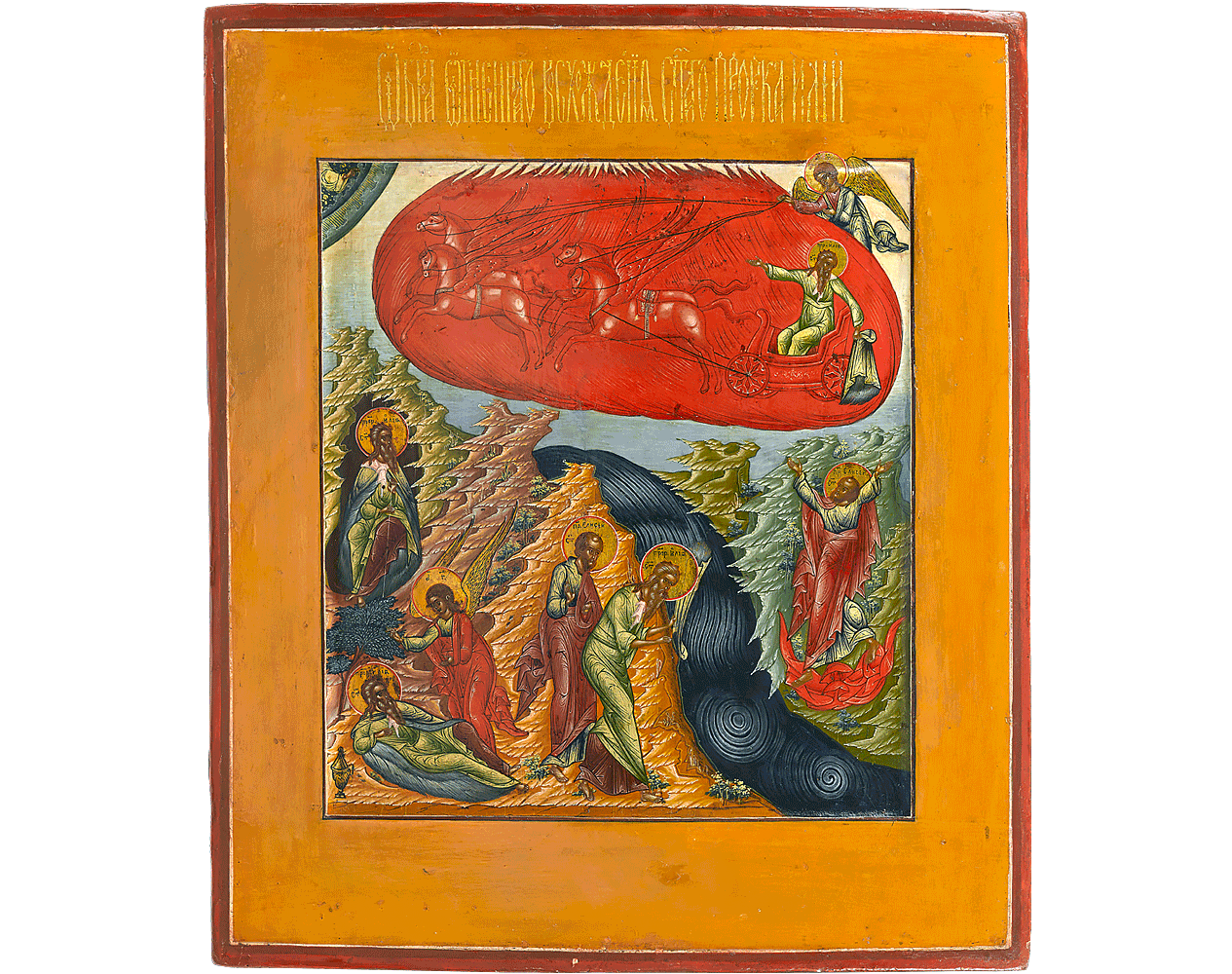
Wassily Kandinsky collected icons, their influence evident in his oeuvre. His 1911 painting, All Saints Day II, mirrors the 15th-century Novgorod icon, The Ascension of the Prophet Elijah, demonstrating a direct dialogue with this sacred past.

However, Kazimir Malevich took this to an audacious conclusion.
Interactive: The Krasny Ugol
Malevich placed his "Black Square" high in the corner of the room—the "beautiful corner" traditionally reserved for the holy icon. Hover over the square (top right) to see the usurpation of the sacred space.
"I have transformed myself in the zero of form and dragged myself out of the nothing to creation..." — Malevich
The Red Rupture: The Spiritual Impulse Endures
State-sponsored atheism became the new institutional religion, yet the spiritual impulse was never eradicated. It survived in subtle contradictions.
The Khrushchev Paradox
In a telling example from the "Thaw" (1961), the officially atheistic Soviet Union issued a postage stamp commemorating Andrei Rublev, the renowned icon painter. Tarkovsky’s movie later emerged, depicting Christianity as one with Russian history.
Poetic Truth in Realism
The lineage survived in realists who synthesized the spiritual depth of icons with the techniques of the Russian realistic school.

Aleksandra Mikhailovna Khaneeva demonstrates how the formal lessons of the icon persisted within realism.

Vyacheslav Zabelin sought the soul of the Russian land, depicting the sacred architecture that stood as silent witness to the spiritual endurance of the people.
The Unbroken Lineage of Truth in Form
From the divine light of Orthodox icons to the abstract symbols of the avant-garde, and through its quiet survival in the realist paintings of the Soviet period, a golden thread of spiritual seeking runs through the heart of Russian art. This tradition, in all its iterations, has consistently been more than a simple reflection of the material world; it represents a persistent effort to articulate a higher plane of existence.
This search for transcendence—whether defined as God, the cosmos, or the poetic soul of a people—is what effectively unifies the seemingly disparate chapters of Russia's artistic history. It stands as a powerful reminder that even in the face of radical political and social change, the deepest human impulses can still endure.
Frequently Asked Questions
Why do icons reject realistic perspective?
Iconographers deliberately rejected linear perspective because it implies a singular, earthly viewpoint. By using inverted or multiple perspectives, they sought to create an image that exists in a timeless, spiritual dimension rather than a terrestrial one.
How did Malevich relate to religious faith?
Malevich treated abstract forms (like the Black Square) as new spiritual absolutes. By placing the Black Square in the icon corner, he symbolically replaced the old religious icon with the icon of pure art.
What is the 'krasny ugol'?
The krasny ugol is the "beautiful corner"—the sacred, diagonal corner of a main room in a traditional Russian home where the most revered family icon is always placed.