
Chasing the Golden Brush: A deeper look at Mikhail Abakumov
When Lazare Gallery founders John and Kathy Wurdeman first began their journey into the Russian art world, it wasn’t a simple shopping trip. It was a hunt. They were "obsessed with quality," driven by a desire to find the technical brilliance that had largely vanished from Western art education.
But finding the art was one thing. Earning the trust of the artists was another. In 2004, the Wurdemans met a giant of the Russian tradition, Mikhail Georgievich Abakumov. Known for capturing the vibrating joy of creation, Abakumov was a legend. However, getting close to him—and his best work—would prove to be the real challenge.
Key Takeaways
The Clash of Cultures
There was initially a deep skepticism about John’s visit. Many Russian masters viewed Westerners as culturally "decadent," unsure if they could truly understand the depth of Realist art.
When John, accompanied by his artist son and painter Olga Belakovskaya, first visited Abakumov, the tension was palpable. In their eagerness to find masterpieces, John and his team were aggressive. They were used to digging through studios to find hidden gems.
 "In the Village of Perukhi", by Mikhail Abakumov
Abakumov hated it. He was a deep thinker, guarded and private. He was offended that strangers were digging through his life’s work without permission. During that first visit, he held back. He showed them only a few smaller works, keeping his masterpieces hidden away.
The Turning Point
So, how did Lazare Gallery secure some of the most significant Abakumov paintings in existence? The answer lies in the "eye." Despite the rocky start, word got back from Abakumov via his friend, the artist Nikolai Dubovik. Mikhail had been watching them closely. He realized that when John did see a painting, he knew exactly which ones were the best. He realized this American gallery wasn't just buying souvenirs; they were hunting for museum-quality greatness.
 "Fresh Hay", by Mikhail Abakumov
The ice broke. On the next visit, the atmosphere was transformed. Mikhail generously had a feast laid out in a large room at the Monastery. The guarded artist had become a host. While he still didn't show them everything, he began to bring out his very best works. He realized Lazare Gallery was a safe harbor where his art would hang beside other giants of the trade.
The Cinematic Eye
Before the Academy, Abakumov graduated from the All-Union State Institute of Cinematography (VGIK). He saw the world like a film director. He didn’t just paint a field; he "modeled space" using light and movement. When you stand in front of a piece like Thunderstorm over the Oka, the air feels charged with electricity—a camerman’s understanding of atmosphere meet's academic discipline.
A Humble Spirit
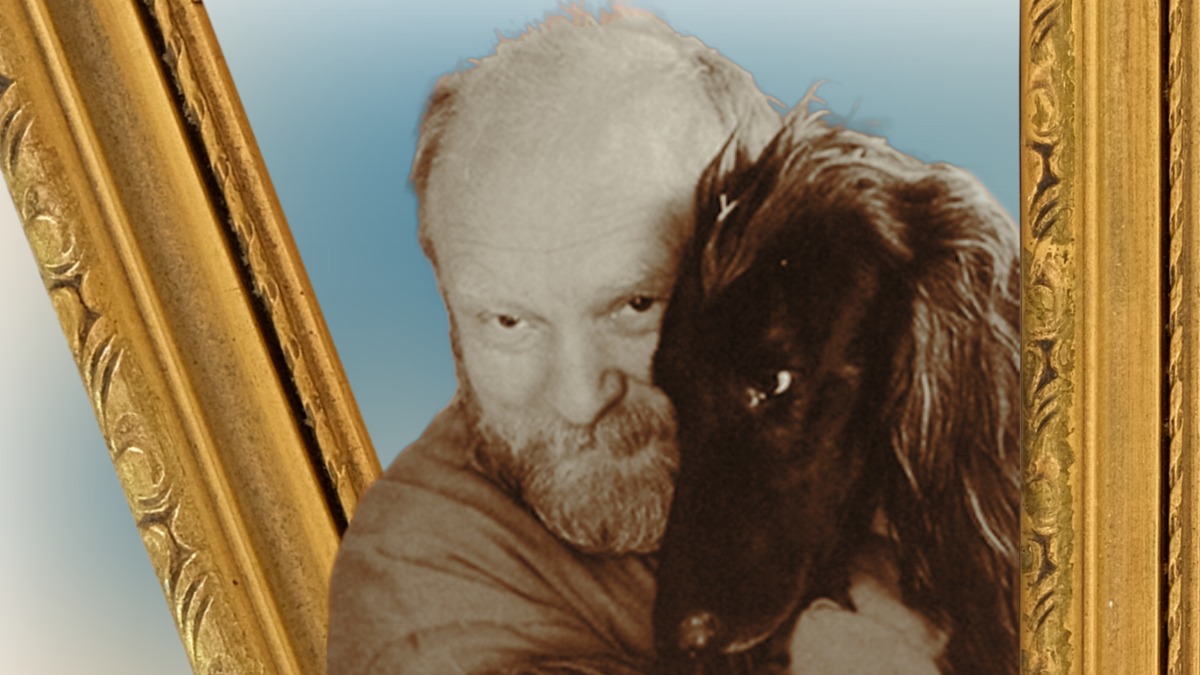
Despite being a "People's Artist of Russia" and a legend in his hometown of Kolomna, Abakumov remained disarmingly humble. When asked for a headshot to use for marketing and press, most artists would send a serious, dignified portrait. Abakumov sent a photo of himself hugging his dog.
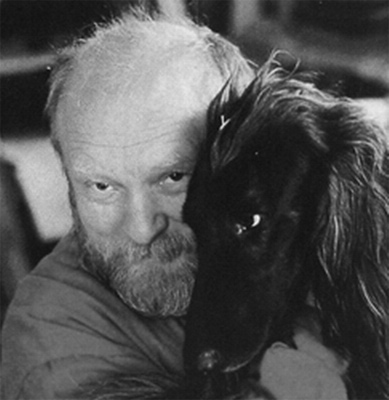
He was quick to smile, respected by the nuns at the local monastery, and fiercely loyal to his friends. In a documentary where he was supposed to talk about his own fame, he instead spent the time poetically gushing about his friend Nikita Fedosov, whom he believed was the true great artist of the 20th century.
A Legacy of Optimism
Abakumov’s philosophy was simple but radical. "The main thing in life is not to get depressed," he said. "Optimism will save us." He viewed his talent as a duty to "sing the world of God" in its beauty. In a modern art world that often rewards cynicism, Abakumov’s work is a "life-affirming symphony of colors."
 "Warm Evening" by Mikhail Abakumov
Navigating the Market
Collecting Abakumov is a journey of its own. Because of his status, exporting his work from Russia is a bureaucratic maze involving the Ministry of Culture and strict heritage laws. This is where the relationships John and Kathy built—over feasts in monasteries and long hours in studios—pay off. Lazare Gallery handles the complex provenance and export permissions, ensuring that when you buy a "Golden Brush", it is authentic, legal, and truly one of the best.
Common Answers
Think of it as reality with a heartbeat. It isn't just a cold copy of a landscape; it captures the emotion of the place. Abakumov combined realistic skills with a spiritual desire to show the harmony of the world.
Imagine a sunny day where everything looks bright and fresh. High-keyed colors have a lot of white mixed in and avoid heavy, muddy black shadows. Abakumov used this to create that signature "optimistic" glow.
Russia treasures its artistic heritage. The government has strict laws to ensure historical masterpieces don't leave the country. Legally exporting art requires expert knowledge of the Ministry of Culture's permitting process—something Lazare Gallery handles for every piece we acquire.