
The Great Relocation: Russian Realism in the Desert
Walking through the doors of Lazare Gallery in Charles City, Virginia, you’ll find a quiet manor along the James River. The grounds serve as a kind of sanctuary, reminiscent of the spirit of pre-Revolutionary Russian patron estates—exactly why founders John and Kathy chose the location. But the history behind the collection is anything but calm.
Key Takeaways
- Artists as Assets: The Soviet state labeled artists as "valuable talent" to preserve the lineage of the Old Masters.
- Extreme Conditions: Students and masters spent a month on overfilled trains to reach Uzbekistan, often riding in luggage shelves.
- Survival Struggles: Evacuees faced raw hunger, malaria, and typhus while living in the Central Asian desert.
- Artists at Work: Artists created peaceful, still works as a technical resistance to the chaos of World War II.
Saving a Legacy in the Desert
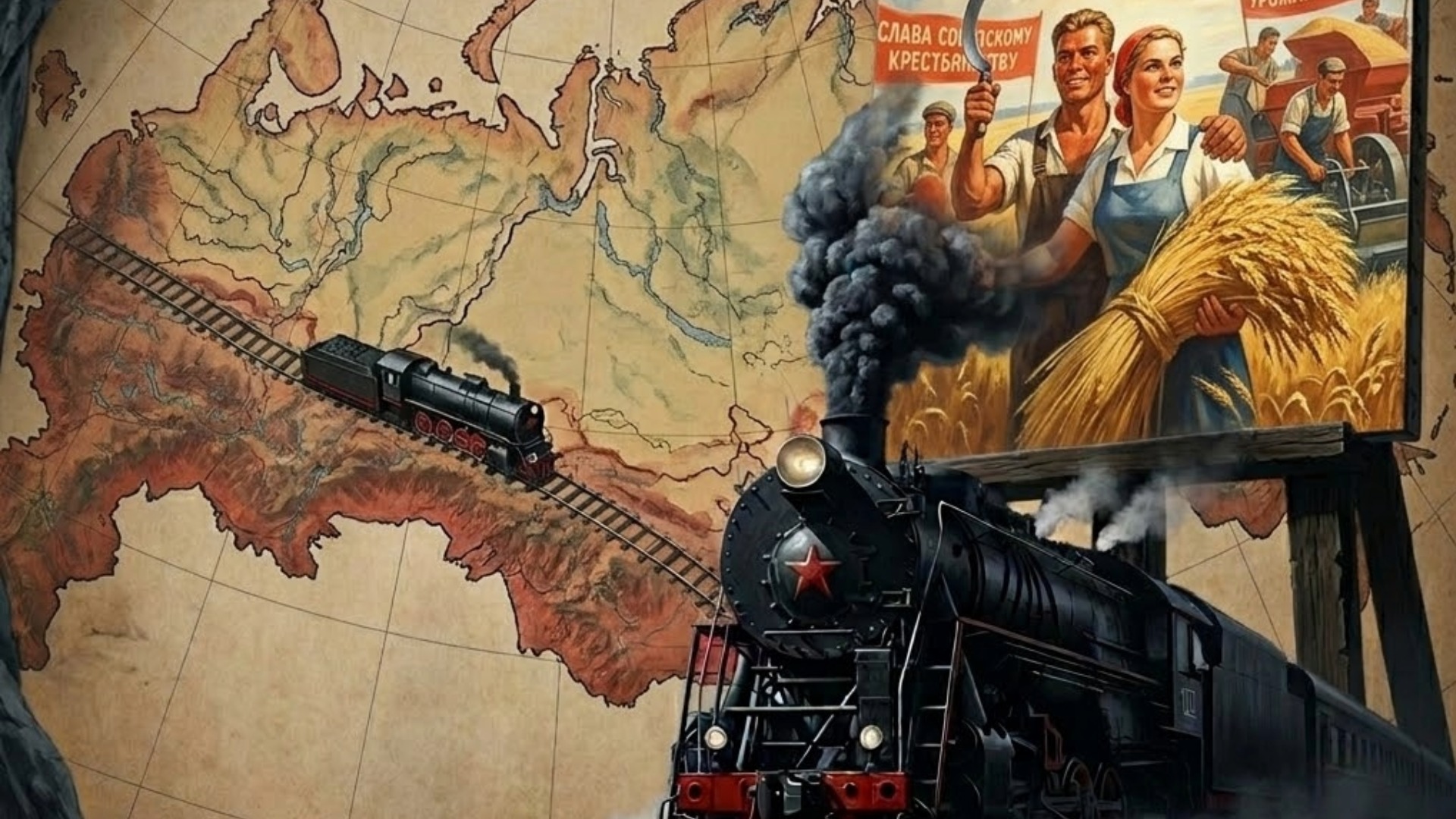
In 1941, as Nazi forces closed in on Moscow and Leningrad, the Soviet state moved 16.5 million people to the interior. Among them were the "elite" artists of the Surikov Institute, people like Yuri Kugach, Olga Svetlichnaya, and Olga Ludevig. Why, when a nation was burning and struggling under the fiery rain of Nazi bombs, did the state prioritize moving painters and others thousands of miles away to the Central Asian desert?

Artists as State Assets
The bombs were already bursting through the city. Flares launched onto roof tops at night, the Germans hoping that they would catch fire, but dutiful Soviet citizens threw them off before complete disaster could ensue. As the assault carried on, the city was in chaos.
Some of the male artists were sent off to dig trenches, but other than that, they were held off from picking up a rifle and charging against the Wermacht advance. For the longest time, the Soviet government wanted to pretend that all was normal, with a stoical attitude towards the loss of much of the Western portion of the country. Students were even ordered to continue going to school.
Finally, the Soviet government had made a surprising announcement. While they were losing ground and struggling to feed their troops, they labeled artists "valuable talent" that had to be protected. They weren't just being kind: “They wanted to ensure that the classical training of the Old Masters didn't die with the war, and in those times of Stalin, artists were also appreciated as potential vessels of bringing back state culture,” the younger painter John Wurdeman V said in a discussion about this period. “And somebody had to restore culture and messaging, who else but those in line with the Old Masters?”
These Realist Eyes
“The train was 17 overfilled wagons long,” recalled Olga Ludevig, talking to gallery curator John Wurdeman IV. Olga Ludevig was one of the "Realist eyes" that were evacuated to Uzbekistan to escape the Nazi advance. There is a deep-rooted historical irony here: a regime often associated with the brutal suppression of dissent went to extraordinary lengths to protect the physical safety of its artists.
In a land as vast as the Soviet Union, "the depths" was a terrifying abstraction—it could mean the Ural Mountains, the Siberian taiga, or the Central Asian desert. And so, this pervasive sense of moving toward an unknown horizon, while under constant threat of surprise attack, provides the necessary context for the stillness we see in the final works.
It took nearly a month to get to their destination. The trains were crowded: “I was petite and rode much of the time in the luggage shelf above,” another painter Olga Svetlichnaya recalled. She told John how they often halted, avoiding bombing raids, before continuing on their way.
Ridicule and Raw Hunger
Life in Samarkand was a collision of worlds. Urban, educated Russians suddenly found themselves in the dust and heat of Uzbekistan, surrounded by donkeys and massive cotton fields. Yuri Kugach recalled the friction of discovery—being mocked by local kids for his accent and even his physical appearance.
For the artists, the challenge was survival. Olga Svetlichnaya once shared a story about working in a kitchen just to find food for her husband. She admitted she couldn't stop staring at the carrots being peeled because she was so hungry. While official history called them "evacuees" to make it sound organized, the reality was a desperate scramble of "refugees" fighting off malaria and typhus.


The Art of Resistance
A breakthrough happened in that harsh sunlight. The state wanted these student artists to paint "uplifting" visions of the common people, but the artists found something deeper. Yuri Kugach rejected the idea of painting "dirt" or misery. He believed a real artist paints what they want to see—the essence of the human spirit.
“You know, I like very much the paintings of De La Croix,” Yuri shared. “They bear such heavy notes of tragedy. The news from the front and the suffering… the world was demoralizing and it worried us greatly.”
“But there were a lot of good things that happened, too,” Olga Svetlichnaya went on. “Besides the war and the hunger, we had dances and masquerade parties, and in the spring as a big group, we would go out collectively to look at the flowering of the peach trees.”
He famously said: "For me, the main thing is poetry. This is the essence of all my work." Instead of following a political script, they used deep perspective and specific horizon lines to build what we referred to in an earlier blog as the "Architecture of Silence".
Common Answers
Was the relocation well-managed?
The government called it an "evacuation" to sound in control, but it was often chaotic. Families were sent to the "depths" without knowing if they were going to the mountains, the forest, or the desert.
Why does this art feel so still?
The artists used the "Architecture of Silence"—a way of building a world inside the frame using manipulated light and space—to act as an antidote to the violence of the 1940s.
Who is John Wurdeman V?
John is an artist and collector who bridge-linked these traditions. He lives in Georgia now, where he also runs a traditional winery, Pheasant's Tears.
Experience the Resilience
View the resilience of the Surikov masters for yourself. You can view our collection online or visit us in person at our Charles City location (by appointment).
Kathy Wurdeman: [email protected]
John Wurdeman: [email protected]