
Olga Ludevig: The "Smiling Rebel" of Russian Realism & Soviet Era Art
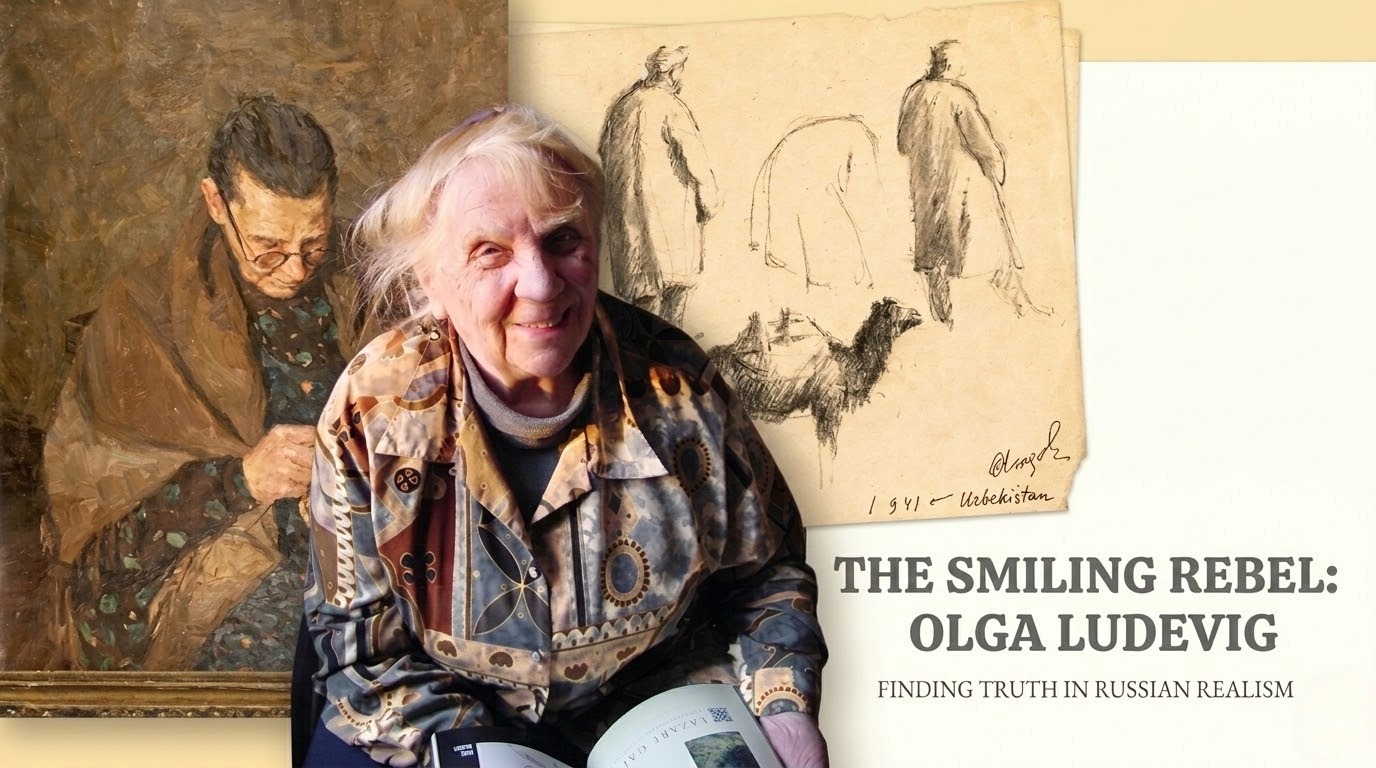
Olga Ludevig (1921–2011) was one of the Soviet era master painters, renowned for her evocative portraiture and deep connection to Russian Realism. A distinguished graduate of the Surikov Institute, Ludevig’s work—ranging from official government commissions to intimate, soulful studies—is a cornerstone of 20th-century Russian art. This guide explores her life, her unique artistic truth, and why her paintings remain a vital investment for modern collectors.
Highlights of Olga Ludevig: A Master of Russian Realism
- Master of Russian Realism: A graduate of the Surikov Institute who moved beyond state-mandated themes to capture deep human emotions.
- The "Smiling Rebel": Known for her joyful personality and her adventurous spirit, often found rowing her handmade boat.
- Psychological Depth: Famous for her ability to illustrate the "human condition," specifically in her unauthorized portraits of the marginalized.
- Collector’s Value: Her work represents a bridge between official Soviet commissions and the "poetry of the heart" that collectors seek today.
The Initial Spark
Art is often a mask. In the era of Socialist Realism, it was frequently a mask of mandatory joy—muscular workers and sun-drenched harvests. But true beauty isn't found in a government directive; it’s found in the quiet, honest corners of a person's soul. At Lazare Gallery, our mission is to uncover these hidden masterpieces of Russian Realism, that idyllic Russian movement that survived the harsh government mandates of the Soviet era and continues even now. Today, we’re celebrating a woman who balanced official success with a private, fierce commitment to the emotional truth of her subjects: Olga Nikolayevna Ludevig.
Olga Ludevig was one of the most important 20th century Russian masters. Born in 1921 into a world of transition, she later became a student at the prestigious Surikov Institute, she was part of an elite group of artists. She was one of those that the Soviet government actually viewed her as a "cultural asset" and evacuated her to Uzbekistan during World War II to make sure her talent survived the conflict.
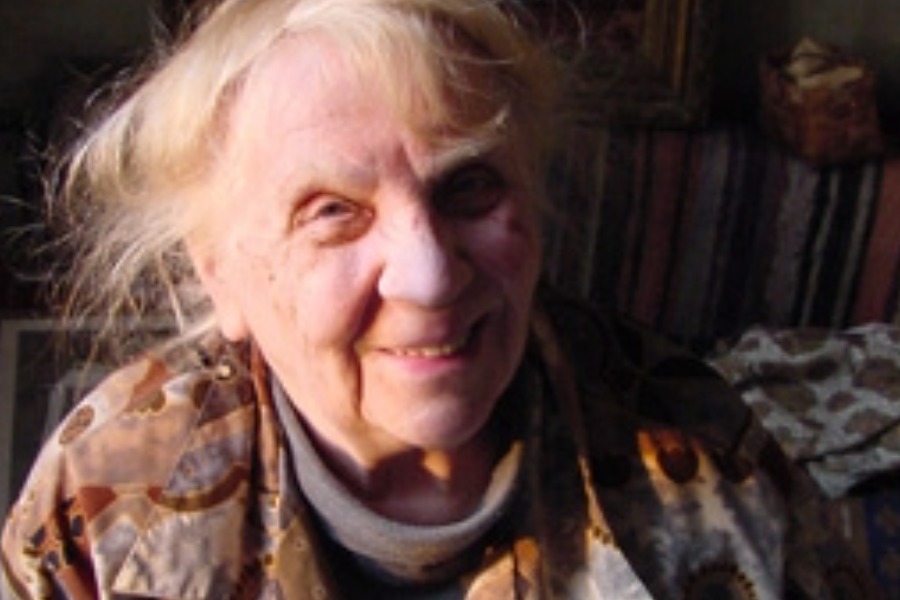 The Smiling Rebel, Olga Ludevig
The problem, however, was the "gap" between public art and private reality. The state demanded Socialist Realism—art meant to glorify the Communist party. But Olga and her peers practiced a deeper Russian Realism. While Socialist Realism was about "pretty" political theatre, Russian Realism was about pravda—the unvarnished truth of life.
The Search for Art
Building the collection at Lazare Gallery often felt like navigating a maze. When John Wurdeman, our gallery co-founder, first met Olga, he found a woman whose face was "beautified by the abundance of smiling lines." She radiated happiness.
Olga was successful; she had had plenty of official government commissions for portraits. But John was looking for the art that came from her heart, not just a state paycheck.
This adventurous spirit translated directly into her work—she wasn't afraid to row into the darker, more honest waters of the human soul.
A Pivotal Moment
The breakthrough came when John spotted a remarkable canvas on her studio floor. It was in terrible shape—stepped on, dirty, and dismissed by Olga herself as "trash". But as he pressed her for the story behind it, the true power of her work emerged. This painting was a masterclass in psychological portraiture, capturing the human condition in art in a way the state never could.
The painting was a portrait of a young man named I. Tayenkina. He was a victim of a cruel social system. During Soviet times, if someone wanted a promotion, they might falsely accuse a rival’s relative of a crime. This young boy was charged and sentenced to live in a remote Siberian village. When he finally got off the train, he had nothing. It was illegal to hire him. His life was broken before it had even begun.
 Portrait of I Tayenkina
While her official commissions were technically perfect, this "trash" painting captured something much more profound. It wasn't just a face; it was an emotional study of an impossible outlook on life. John realized that this was a "decision of a lifetime" for a collector—to save a work that the artist herself thought was lost.
As John explains: "Olga was able to insightfully and emotionally capture a broken young man with an impossible outlook on any kind of normal life."
A Legacy of Heart
Olga Ludevig’s life reminds us that even in a world of rigid rules, the human spirit finds a way to speak. She didn't just paint what she was told; she painted what she felt. By comparing her commissioned works—like her portrait of the teacher Lubimeva—to the paintings of people she truly loved, like her neighbor Rachmanovskaya, you can see her true genius.
 Vegetable Seller
 An Honorable Teacher
Our goal at Lazare Gallery is to bring these honest stories to light. We believe that superior artistic quality is the only thing that truly matters. As we look toward the future, we continue to seek out these traditions—works that act as a sanctuary from the noise of the modern world. For those seeking investment grade Russian art, Ludevig’s work offers more than financial value, it offers a bridge to a lost era.
FAQ: Russian Realism vs. Socialist Realism and Art Investment
What is the difference between Russian Realism and Socialist Realism?
Socialist Realism was state-mandated art meant to glorify the government. Russian Realism is an older, deeper tradition focused on the "soul" and the authentic, non-political life of the people.
Is Olga Ludevig's work a good investment?
Yes. Russian Realism is an undervalued segment of the global art market. Her ability to capture the "human condition" gives her work a timeless quality that collectors are now beginning to prize.
Can I see her paintings in person?
We would love to show them to you. We are located in Charles City, Virginia, and are open by appointment. Our gallery on the James River offers a peaceful place to learn about these artists.
Are you ready to start your own "Quest for Beauty"?
Discover the honest, breathtaking world of Olga Ludevig and our other masters.
Explore more Olga Ludevig worksOr contact us today to schedule a private viewing. Own a piece of history that doesn't just decorate a room—it tells a story.